Define The Job Before It Starts
Higher-risk materials, controlled removal and independent clearance. This service supports our wider asbestos removal Glasgow work for business premises. See our commercial coverage or send a site enquiry with the information you already hold.
When Licensed Removal Is Needed
Pipe insulation, sprayed coatings and many jobs involving asbestos insulating board can need licensed removal. A damaged plant-room installation presents different risks from intact cement sheeting, even when both occupy a small area. The survey, material condition, planned methods and likely exposure must be assessed together.
For a facilities manager, the first useful document is a survey that identifies the actual material and its location. Photographs can help explain access and surrounding services, but they do not establish asbestos type or the legal category of work. Ask for the classification decision to be recorded in the proposed scope.
The Legal Position In Glasgow
The Control of Asbestos Regulations 2012 apply in Scotland. Regulation 8 restricts licensable asbestos work to an employer holding the appropriate licence, while Regulation 9 addresses notification. Licensable work normally requires notification at least 14 days before it starts, unless the enforcing authority agrees a shorter period (CAR 2012, Regulation 9).
This is a legal planning period rather than a promise about availability. Ask to see the appointed contractor’s current licence and check that it covers the intended work. Our enquiry process does not itself establish that a particular contractor has been selected or approved.
Preparing An Occupied Commercial Building
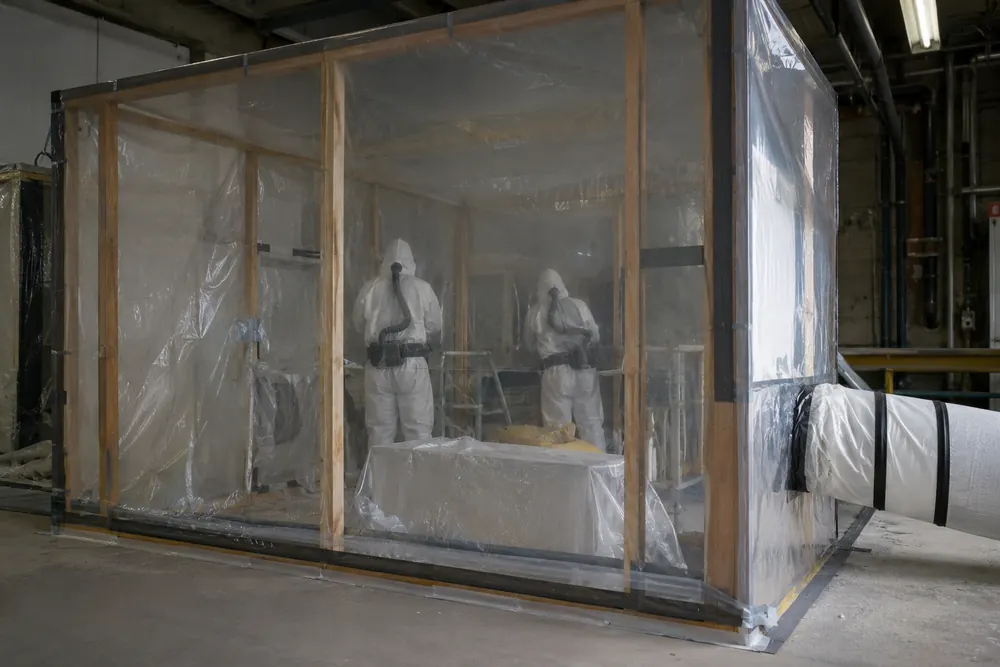
A removal enclosure needs space beyond the asbestos itself. The planning discussion should cover decontamination facilities, waste routes, equipment locations, ventilation and any service isolations. A loading bay used by delivery drivers cannot casually become a waste route while normal traffic continues.
For schools, offices or multi-tenant premises, decide who will brief occupants and control access. Agree how fire escape arrangements and neighbouring activities will be maintained. These practical details belong in the plan of work and programme before the work area is handed over.
Independent Clearance And Your Handover
Where licensed enclosure work requires four-stage clearance, a suitably accredited analyst assesses the area before the certificate for reoccupation is issued. The process includes checking the work area, a detailed visual inspection, clearance air monitoring and a final assessment after the enclosure is removed. HSE’s HSG248 explains the analytical procedure.
Agree the analyst appointment and clearance scope before removal begins. Keep the certificate, removal scope, waste documentation and any record of residual material together. The dutyholder must update the asbestos register to reflect the completed work rather than assuming the whole building is asbestos-free.
How The Work Is Organised
- Review The Evidence
Share the survey, marked plans and planned building work. Identify any inaccessible areas that could change the removal boundary.
- Agree Controls
The appointed licensed contractor prepares the risk assessment and plan of work, with notification and site arrangements addressed before mobilisation.
- Remove And Clean
The work proceeds within the agreed controls, with access restrictions, suitable equipment and a defined route for packaged waste.
- Verify The Handover
Complete the specified independent clearance and assemble the records needed for reoccupation and the building’s continuing management.
What Affects The Cost?
Licensed removal costs depend on the material, enclosure size, access, decontamination arrangements, service isolations and programme. A small quantity in a congested riser may need more preparation than a larger accessible installation. Ask whether the quotation includes analytical support, waste, access equipment and reinstatement.
Compare quotations against the same marked removal boundary. Identify exclusions such as inaccessible voids, replacement insulation and making good before appointing anyone. A provisional price without survey evidence may change once the material and working conditions are established.
Licensed Asbestos Removal Questions
Does All Asbestos Need A Licensed Contractor?
A licensed contractor is required for work classified as licensable, rather than for every asbestos task. Some lower-risk work may be non-licensed or notifiable non-licensed. A competent assessment must consider the material, its condition, the task and likely exposure before choosing the correct route.
The controls still matter in every category.
Can Licensed Removal Start Straight Away?
Licensed removal normally needs advance notification and a prepared work area, so an immediate start should not be assumed. The enforcing authority can agree a shorter notification period in appropriate circumstances. Tell us about damage, occupancy and project deadlines so the appointed contractor can assess the situation and explain the lawful programme.
What Proves The Area Can Be Used Again?
Reoccupation after licensed enclosure removal normally relies on the specified four-stage clearance and certificate for reoccupation from an appropriately accredited analyst. Check that the certificate covers the precise work area and scope. Keep it alongside the removal records, and record any remaining asbestos in your management documents before other trades return.
Technical references: HSE: Licensable Work · CAR 2012: Notification · HSE: Analysts’ Guide.