Define The Job Before It Starts
Intrusive investigation tied to the actual construction scope. This service supports our wider asbestos removal Glasgow work for business premises. See our commercial coverage or send a site enquiry with the information you already hold.
Match The Survey To The Work
A refurbishment survey focuses on the part of the building affected by the project. A demolition survey needs a scope appropriate to the building being demolished. Neither should be commissioned using only a room name if the work also affects voids, risers, foundations or connected services.
Provide drawings, a schedule of work and an explanation of the methods proposed. Replacing a surface finish is different from opening the construction beneath it. If the project scope changes later, ask whether the survey still covers the new disturbance rather than assuming the first report remains sufficient.
Why Intrusive Access Matters
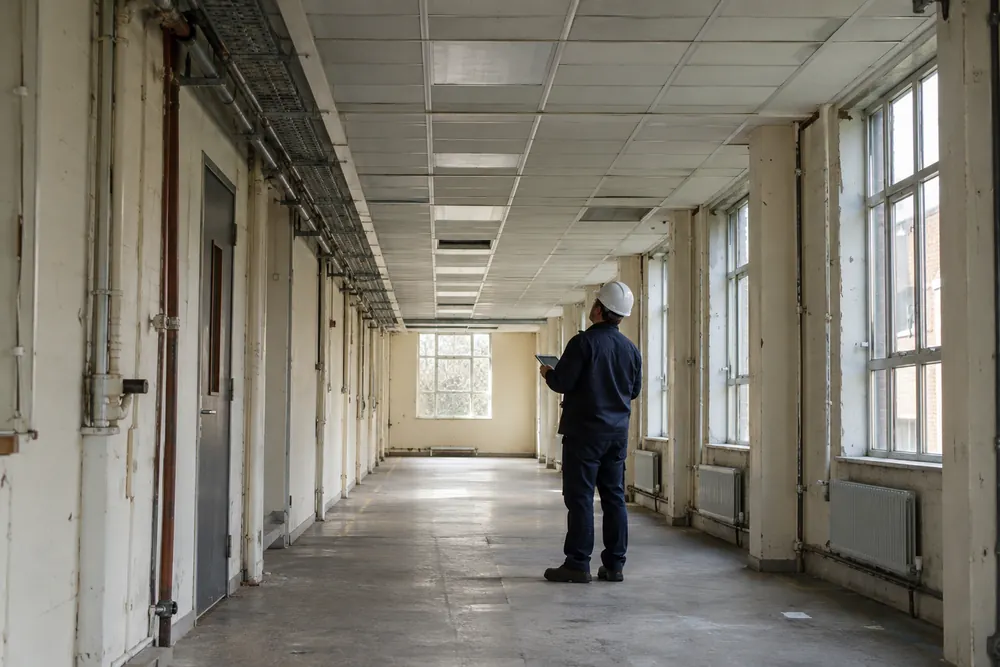
Asbestos can be concealed within structural interfaces, partitions and service routes. A management survey may leave these spaces unopened because it supports normal use. A refurbishment or demolition investigation must reach the relevant concealed locations as far as reasonably practicable, using planned destructive inspection where needed.
The survey area must be vacated during intrusive work. Agree service isolations, safe access and protection for adjacent occupied areas before the visit. The surveyor should establish that the area is fit for reoccupation afterwards, with appropriate inspection and further checks where the circumstances require them.
HSG264 And The Legal Framework
HSE’s HSG264 explains the planning and reporting requirements for refurbishment and demolition surveys. The Control of Asbestos Regulations 2012 require asbestos risks to be identified before relevant work and asbestos to be removed as far as reasonably practicable before major refurbishment or final demolition.
The Construction (Design and Management) Regulations 2015 also make suitable project information important to the planning of construction work. Give designers and contractors the report early enough to shape their methods and programme. Filing it after tenders are agreed can leave important risks outside the priced scope.
Restrictions Need A Resolution
A survey limitation is a decision that the project team must manage. If live equipment, inaccessible voids or unstable construction prevent inspection, record the exact location and reason. Agree how and when further investigation will occur, with controls that prevent the uncertain area being disturbed prematurely.
Avoid vague assurances that a building is clear when parts of the work zone were not accessed. A useful tender package distinguishes confirmed materials, inspected areas and unresolved locations. It also identifies who will authorise work to resume once those uncertainties have been addressed.
Use The Findings Before Strip-Out
The survey is an input to the removal specification and construction sequence. Confirm which materials will be removed, which can remain outside the work boundary and whether licensed work is involved. Build the required notifications and analytical checks into the programme before setting dates for following trades.
For a phased commercial project, mark the handover boundaries carefully. One cleared floor does not establish the condition of a neighbouring riser or later phase. Maintain a controlled copy of the findings and update the register with completed removals and any remaining materials.
How The Work Is Organised
- Review Project Information
Share drawings, proposed methods, previous surveys and the locations of plant and services affected by the work.
- Prepare The Survey Area
Agree vacancy, isolation, access equipment and the permitted extent of destructive investigation before attendance.
- Investigate And Report
A competent surveyor inspects the work zone, samples as needed and records materials, plans and limitations.
- Close The Information Gaps
Resolve exclusions, specify the asbestos works and release construction areas only after the required preparation and handover.
What Affects The Cost?
Survey costs depend on the extent of the project, building complexity, intrusive access, sample numbers and any specialist equipment needed. Service isolations, multiple visits and staged access can change the scope. Reinstatement of survey openings should be agreed explicitly, particularly if the premises will be occupied again before construction.
Supply the same drawings and work schedule to each surveyor for a useful comparison. Check whether the fee includes laboratory analysis, detailed plans and discussion of restrictions with the project team. Avoid pricing an investigation against an incomplete description of the proposed works.
Refurbishment And Demolition Survey Questions
Can A Management Survey Be Used For Demolition?
A management survey is not a substitute for a demolition survey. It is intended to support normal use and may not investigate hidden materials that demolition will disturb. Commission a survey matched to the demolition scope and resolve restrictions before work starts, using the findings to specify asbestos removal and the construction sequence.
Must The Whole Building Be Vacant For A Refurbishment Survey?
A refurbishment survey requires the intrusive survey area to be vacated and isolated appropriately. Whether the whole building must close depends on the scope and how effectively adjacent areas can be protected. Agree the arrangements with the surveyor in advance, including access, services and the checks required before any surveyed area is used again.
Technical references: HSE: Refurbishment Surveys · HSE: HSG264 · HSE: CDM 2015.